Health & Safety Policy — Commercial Waste Removal Haringey
Purpose: This policy sets out the commitments and procedures for safe, compliant operation of a commercial waste removal business operating within its rubbish company service area. It applies to all staff, contractors and sub-contractors engaged in commercial rubbish collection, skip hire, and associated waste handling activities. The policy supports safe working practices, environmental protection and regulatory compliance for a waste removal service covering commercial premises and construction sites.Our organisation recognises that effective health and safety management is essential to deliver a professional waste removal service Haringey and nearby service zones. All employees must follow safe systems of work and report hazards without delay. The managing director retains overall responsibility for policy implementation while supervisors and team leaders have delegated duties to ensure safe operations in every rubbish collection task.
 Responsibilities are allocated as follows: management ensures adequate resources and training; site supervisors ensure job-specific risk controls; and operatives follow instructions and use PPE. Key responsibilities include:
- Carrying out and recording risk assessments for each commercial waste contract.
- Ensuring vehicles and containment equipment are inspected and maintained.
- Providing correct personal protective equipment and manual handling aids.
Scope and Application
This policy covers collection, transport, sorting and temporary storage of commercial and industrial waste across the company's rubbish company service area. It includes duties for handling mixed commercial waste, segregating recyclables, managing hazardous or regulated waste streams and coordinating third-party disposal facilities. The policy is designed to be applied consistently across all contracts and workplaces to protect employees, clients, visitors and the public.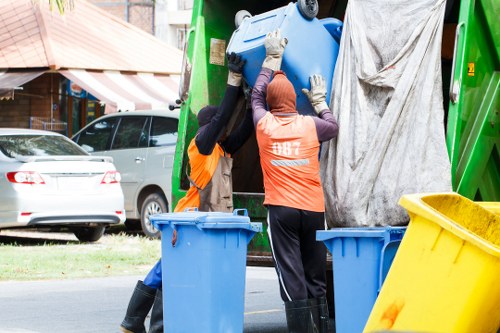
Risk Assessment and Control Measures
Robust risk assessment is central to our approach. For each site and job type a documented assessment will identify hazards (manual handling, vehicle movements, sharps, chemical exposure, biological hazards) and define proportionate controls. Controls include hierarchy of risk reduction: elimination, substitution, engineering, administrative controls and PPE. Controls are reviewed whenever work changes or following an incident.Training and competence are mandatory: all operatives receive induction, task-specific training and refreshers. Record keeping of training, certifications and toolbox talks supports continuous improvement. Supervisors ensure staff competence for particular commercial rubbish collection tasks and for operating mechanical aids and lift-assist equipment.
Vehicles and plant are central to a commercial waste contractor's operations. Preventive maintenance schedules, daily vehicle checks and safe loading procedures reduce risk. Drivers must follow safe reversal procedures, use banksmen where needed and secure loads to prevent spillage during transport. Vehicle routes should be planned to minimise time in congested areas while adhering to environmental and noise control considerations for client sites.
 Incident reporting and emergency response arrangements ensure timely action. All accidents, near-misses and dangerous occurrences are reported, recorded and investigated. Emergency procedures address fire, spillage and hazardous material incidents; spill kits, fire extinguishers and first-aid equipment are maintained at appropriate locations. Lessons learned are communicated so corrective measures are effective and sustainable.
 Record keeping and monitoring underpin compliance: risk assessments, COSHH registers, vehicle inspection logs, training records and incident reports are maintained and audited. Regular health and safety audits and performance reviews assess the effectiveness of controls and highlight improvements. The organisation will set measurable objectives for safety performance and waste diversion, and review these targets annually.
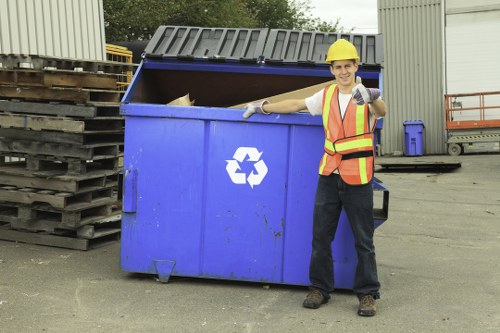
Safe Work Practices: Operatives must follow safe lifting techniques, segregate waste correctly, and identify potentially hazardous loads prior to handling. Use of mechanical aids is encouraged to reduce manual handling injuries. PPE—gloves, high-visibility clothing, protective footwear and eye protection—must be worn where indicated. Sharps and hazardous waste are handled only by trained personnel using appropriate containment and labelled packaging.
Contract management requires that contractors and subcontractors working on behalf of the company meet the same safety standards. Pre-employment checks, induction and documented competency evidence are required before personnel undertake any commercial waste collection work. Suppliers of waste processing and disposal services are selected based on verified permits and environmental credentials to ensure lawful and responsible disposal.
Policy Review and Continuous Improvement: This health and safety policy is reviewed at least annually or after significant change, incident or regulatory update. Continuous improvement is achieved through incident analysis, audit outcomes and staff consultation. Everyone has a duty to contribute to safer working by suggesting improvements and taking personal responsibility for safety.
